
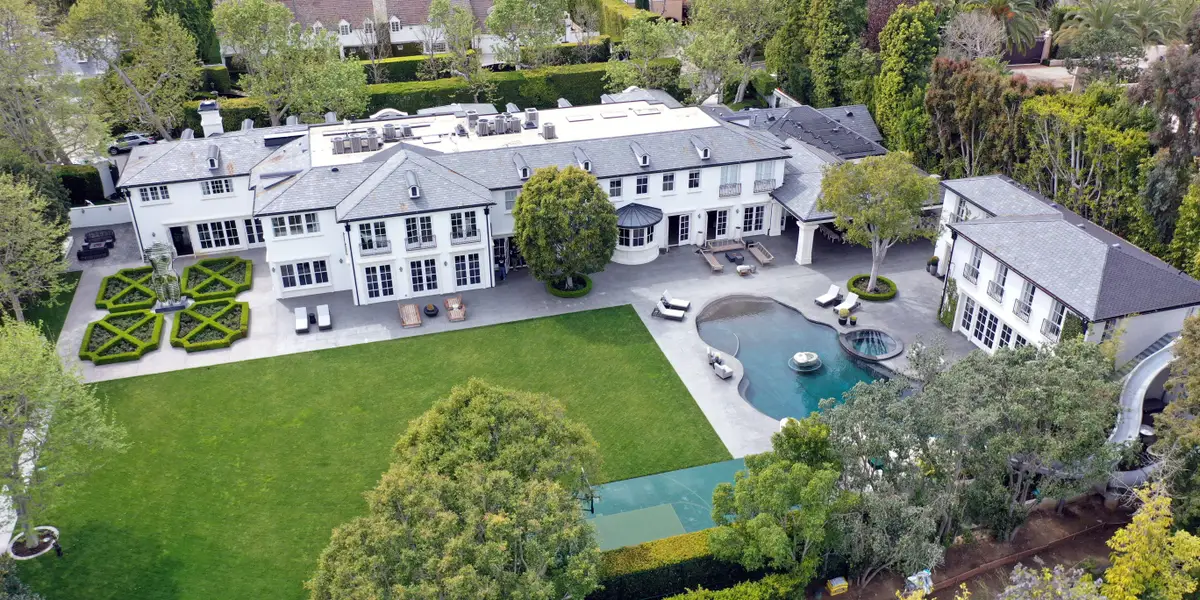
When Sean “Diddy” Combs listed his luxurious Holmby Hills mansion for $61.5 million in September 2024, he probably expected the property to attract wealthy buyers quickly. Instead, the 17,000-square-foot estate has become one of the most difficult celebrity homes to sell, attracting minimal interest and only one lowball offer of $30 million. The diddy mansion sale stigma has turned this once-coveted property into what real estate insiders are calling “radioactive” in the luxury market.
Understanding the Diddy Mansion Sale Stigma
The stigma surrounding Combs’ Beverly Hills property represents a perfect example of how legal controversies can dramatically impact real estate values. Since his arrest on federal charges including racketeering and sex trafficking, the mansion has struggled to find buyers willing to meet even a fraction of the asking price.
Real estate sources report that few potential buyers have walked through the mansion that was raided by Homeland Security in March, with many expressing discomfort about the property’s association with ongoing legal proceedings. One married couple reportedly toured the home, but the woman was “creeped out” and couldn’t wait to leave.
What Makes a Property Stigmatized?
A stigmatized property is real estate that buyers avoid for psychological reasons unrelated to its physical condition. The National Association of Realtors defines it as property that has been psychologically impacted by events such as murder, suicide, alleged hauntings, or a notorious previous owner.
In Combs’ case, the stigma stems from multiple factors including the highly-publicized federal raid, criminal charges, and numerous civil lawsuits alleging serious misconduct. These elements have created what industry professionals call an “ick factor” that’s keeping potential buyers away.
Types of Property Stigmas
Criminal Stigma: Properties associated with criminal activity face the steepest challenges in resale. Criminal stigma occurs when a property was used in the ongoing commission of a crime, such as a brothel, chop shop, or drug den.
Reputation Stigma: When a property becomes infamous due to its owner’s actions, the association alone can deter buyers. Even without criminal convictions, public allegations and media coverage create lasting impressions.
Legal Stigma: Homes entangled in ongoing legal proceedings face unique challenges. Buyers worry about potential complications, unwanted attention, and the difficulty of separating themselves from the property’s troubled history.
The Market Reality for Diddy’s Holmby Hills Estate
Purchased in 2014 for approximately $39 million, the 17,000-square-foot property has drawn only one serious offer – a $30 million bid from developer Steven “Bo” Belmont that was rejected. This represents a massive discount from the asking price and would result in a significant loss for Combs.
Belmont, known for purchasing and flipping stigmatized celebrity properties, stated he aims to “remove the stigma” attached to the property through renovation. His previous investments include Kanye West’s abandoned Malibu mansion, which he acquired at a substantial discount.
Property Features That Should Attract Buyers
Despite the stigma, the mansion offers impressive luxury amenities:
- 10 bedrooms and 13 bathrooms
- State-of-the-art home theater seating 35 people
- Resort-style pool with waterfall
- Private spa house and full gym
- Recording studio in separate guest house
- Wine cellar and gourmet kitchen
- Basketball court and outdoor entertainment areas
- Situated in exclusive Holmby Hills neighborhood
Under normal circumstances, these features would make the property highly desirable to ultra-wealthy buyers. However, the overwhelming stigma has rendered these luxuries almost irrelevant in buyers’ decision-making process.
How Stigma Impacts Property Values
Real estate experts consistently report that stigmatized properties sell for significantly less than comparable homes. Properties associated with dark histories may be available for 10% to 25% less than typical market value, though the discount can be much steeper in high-profile cases.
Dr. Randall Bell, a real estate appraiser specializing in stigmatized properties, notes that the diminution in value is generally between fifteen and twenty percent, depending on various factors. However, in extreme cases like Diddy’s mansion, the stigma can be so severe that finding any willing buyer becomes the primary challenge.
The Role of Media Coverage
Extensive media coverage amplifies property stigma. When news outlets repeatedly associate a property with criminal investigations, raids by federal agents, and legal proceedings, that association becomes difficult for future owners to escape. Every article, photograph, and television segment reinforces the connection in potential buyers’ minds.
The Homeland Security raid in March received widespread coverage, with images of the mansion surrounded by federal agents broadcast internationally. This visual association creates a lasting impression that’s difficult to overcome through traditional marketing strategies.
Disclosure Requirements and Legal Considerations
State laws vary significantly regarding what sellers must disclose about stigmatized properties. In New York State, sellers and real estate agents are not legally required to disclose if a property is stigmatized due to events like murder, suicide, or paranormal activity.
However, California has different rules. California law requires that the death in the home of any occupant within the past three years including natural deaths be disclosed to a potential buyer. While no deaths occurred at Combs’ property, the federal investigation and arrests create a different type of disclosure concern.
Real estate professionals must answer truthfully if directly asked about stigmatizing events. Most agents working with high-profile properties like Diddy’s mansion proactively address these concerns to avoid future legal complications.
Comparing Celebrity Property Scandals
Diddy’s mansion isn’t the first celebrity property to face severe stigma. Historical precedents show varied outcomes:
O.J. Simpson’s Brentwood Estate: Following the infamous murder trial, Simpson’s property sold at a significant discount. The new owner demolished the house entirely to distance the land from its notorious history.
Michael Jackson’s Neverland Ranch: Despite Jackson’s global fame, his sprawling estate struggled to sell for years after his death, eventually selling for a fraction of its original asking price.
Harvey Weinstein’s Properties: Multiple properties associated with the disgraced producer faced extended market times and price reductions as buyers hesitated to associate themselves with his crimes.
Celebrity home values can take a hit when a celebrity has passed away from sad or unfortunate circumstances, and the impact is even more severe when criminal allegations are involved.
The Psychology of Buying Stigmatized Properties
Understanding why buyers avoid stigmatized properties requires examining the psychological factors at play. Even wealthy purchasers who could afford multiple homes are reluctant to associate themselves with properties connected to serious crimes.
Social Perception: Buyers worry about how friends, family, and business associates will perceive their purchase. Living in a home associated with criminal activity can carry social consequences, regardless of the buyer’s innocence.
Resale Concerns: Smart investors recognize that stigma doesn’t disappear quickly. Any future sale will likely require similar discounts and face comparable buyer resistance.
Emotional Discomfort: Many people simply cannot feel comfortable in a space associated with alleged misconduct. This emotional response is powerful and rational arguments about value cannot overcome it.
Market Conditions and Luxury Real Estate Challenges
Beyond stigma, Diddy’s mansion faces broader challenges in the luxury real estate market. Homes in the $20 million-plus category can be particularly difficult to value and often stay on the market longer than more modestly priced properties.
The ultra-luxury market has a limited pool of potential buyers, and when stigma removes even a portion of that pool, finding a purchaser becomes exponentially harder. Real estate professionals note that Diddy’s asking price is “ridiculous” and the property is worth nowhere near the $61.5 million he’s asking.
Competition from Other Luxury Listings
Holmby Hills and surrounding neighborhoods have numerous luxury properties available without stigma attached. Buyers with $50-60 million to spend have many options, and few are willing to accept the baggage that comes with Combs’ mansion when alternatives exist.
Strategies for Selling Stigmatized Properties
Real estate experts who specialize in stigmatized properties recommend several strategies:
Significant Price Reductions: The most effective approach is aggressive pricing that acknowledges the stigma’s impact. Properties must be priced attractively enough to overcome buyers’ psychological resistance.
Time and Distance: As years pass and news coverage fades, stigma naturally diminishes. However, this strategy requires patience that distressed sellers often lack.
Complete Renovation: Some buyers purchase stigmatized properties specifically to transform them. Major renovations can help create psychological distance from previous events.
Target Specific Buyer Types: Certain buyers actively seek stigmatized properties, including investors who flip homes, developers who demolish and rebuild, and buyers who simply don’t share common stigma concerns.
Developer Bo Belmont represents this latter category. His business model specifically targets celebrity properties with stigma, purchasing them at deep discounts and either renovating or redeveloping them for profit.
Read More: Uñas Rosas: Guía Completa de Tendencias, Diseños y Estilos 2025
The Financial Impact on Combs
The inability to sell at asking price creates significant financial pressure. Combs purchased the home in 2014 for just over $39 million, and even the $30 million offer would represent a substantial loss before considering selling costs, property taxes paid during ownership, and maintenance expenses.
For someone facing extensive legal fees and potential civil judgments, converting the property to cash becomes increasingly important. However, accepting a massive discount sends signals about desperation that could impact other financial negotiations.
Broader Implications for Celebrity Real Estate
The Diddy mansion situation highlights vulnerabilities in celebrity real estate investments. While celebrity ownership often increases property value and attracts more buyers, that relationship can reverse dramatically when controversy strikes.
Properties heavily customized to celebrity owners’ tastes also face challenges. Idiosyncratic renovations can make it harder to profit from a real estate investment, as money spent on personal preferences may not appeal to future buyers.
What Happens Next?
Several scenarios could unfold for Combs’ mansion:
Extended Price Reductions: The property may require multiple price cuts before reaching a level where buyers overcome their resistance. This could mean accepting offers in the $25-35 million range.
Investor Purchase: A developer or investor might eventually purchase the property with plans to significantly renovate or possibly demolish and rebuild, completely erasing the connection to Combs.
Long-Term Holding: If Combs refuses substantial discounts, the property could remain listed for years, accumulating carrying costs while waiting for stigma to fade.
Foreclosure Risk: If financial pressures mount, the property could eventually face foreclosure proceedings, though this seems unlikely given Combs’ substantial assets.
Lessons for Luxury Home Buyers and Sellers
The Diddy mansion sale stigma offers important lessons for anyone involved in high-end real estate:
Due Diligence Matters: Buyers should research property history thoroughly. Google the full address to see if there are recent news articles about the property or area.
Stigma Fades Slowly: Sellers should understand that stigma associated with serious criminal allegations takes years to diminish meaningfully.
Price Appropriately: Properties with stigma must be priced to reflect that reality. Overpricing stigmatized properties guarantees extended market times.
Consider Alternatives: Buyers seeking value in stigmatized properties should carefully weigh potential savings against future resale challenges.
The Role of Real Estate Professionals
Agents listing stigmatized properties face unique challenges. They must balance client interests with ethical obligations to provide accurate information. The National Association of Realtors advises its members to disclose any information that could affect a reasonable purchaser’s decision to purchase.
Experienced agents specializing in luxury properties understand how to position stigmatized homes to maximize their appeal to specific buyer segments while managing expectations about pricing and market time.
Conclusion: The Long Road Ahead
The diddy mansion sale stigma demonstrates how dramatically legal troubles can impact even the most luxurious real estate. What should have been a straightforward luxury property sale has become a cautionary tale about the intersection of celebrity, crime, and real estate values.
Nearly a year after Sean “Diddy” Combs listed his Holmby Hills estate for $61.5 million, the property has drawn only one serious offer, and prospects for a quick sale at anything close to asking price appear dim.
The ultimate resolution will likely involve substantial price concessions, patient negotiations, and acceptance that some financial losses are unavoidable. For potential buyers, the property may eventually represent an opportunity to acquire a truly luxurious home at a significant discount, provided they can overcome the psychological barriers that have kept others away.
As legal proceedings continue and media attention persists, the stigma will remain a powerful force shaping the property’s marketability. Time eventually heals most real estate wounds, but in the case of Diddy’s mansion, that healing process has only just begun and may take years to complete.
The story serves as a reminder that in real estate, as in life, reputation matters enormously, and negative associations can prove far more powerful than luxurious amenities or prestigious addresses.