
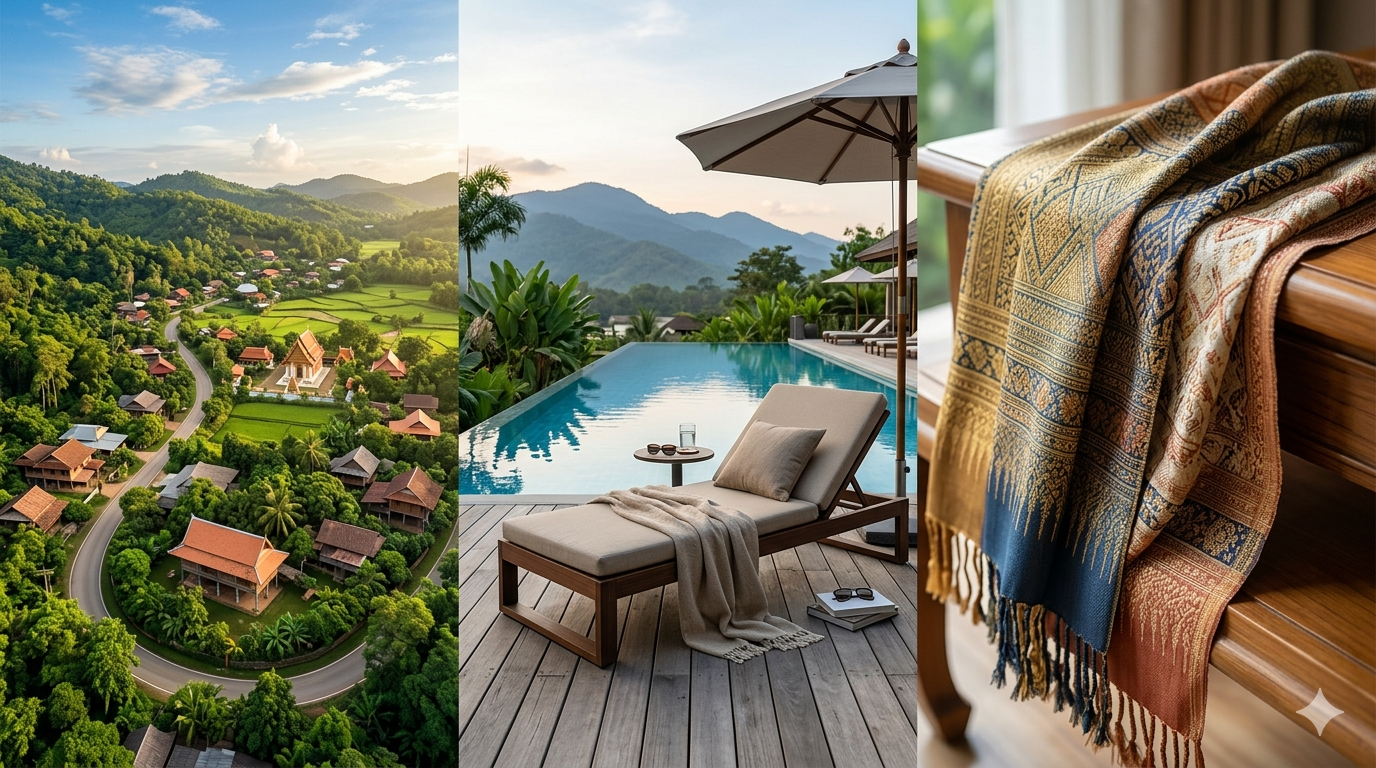
“Tumbons” is one of those rare words that carries entirely different weight depending on where you encounter it — a subdistrict in rural Thailand, a handwoven wrap passed down through generations, or a reclining outdoor chair on a sun-soaked patio.
If you searched “tumbons” and got confused by conflicting results, you’re not alone. The word sits at a genuine crossroads of geography, craft tradition, and modern design — and most existing explanations pick just one lane. This guide covers all of them, clearly, with enough depth to actually be useful.
Whether you’re researching Thailand’s local government system, shopping for outdoor furniture, exploring global textile traditions, or just trying to settle a curious word rabbit hole — this is the one resource you need.
What You’ll Find Here
- The Three Core Meanings of Tumbons
- Tambons in Thailand: The Administrative Reality
- Tumbons as Outdoor Furniture: The Reclining Lounger
- Tumbons as Cultural Textiles and Wraps
- Types and Variations: A Practical Breakdown
- How to Choose the Right Tumbon (Furniture Edition)
- How to Wear and Style a Tumbon (Textile Edition)
- 2026 Trends: What’s Changing
- Frequently Asked Questions
The Three Core Meanings of Tumbons
The word “tumbons” doesn’t have a single definition. It has three — and they come from genuinely different places.
Tracing the word’s roots matters here. The Spanish tumbón described someone who likes to recline, relax, take things slowly. That root idea of ease and supported rest quietly runs through all three modern uses of the word, even where the etymology seems unrelated.
| Meaning | Origin | Context | Who Searches It |
|---|---|---|---|
| Thai Subdistrict (Tambon) | Thai administrative system | Governance, geography, travel | Researchers, travelers, expats |
| Reclining Outdoor Lounger | Spanish tumbón → modern branding | Outdoor furniture, patio design | Homeowners, designers, shoppers |
| Cultural Textile / Wrap | Artisan traditions across multiple regions | Fashion, heritage, slow living | Fashion researchers, cultural enthusiasts |
None of these meanings is wrong. They’re just different conversations happening under the same word. The rest of this guide unpacks each one properly.
Tambons in Thailand: The Administrative Reality
In Thailand, a tambon (also spelled tumbon in casual English writing) is a local administrative subdistrict — the third tier in the country’s governance hierarchy, sitting between the district (amphoe) and the village (muban).
As of 2024, there are 7,255 tambons across Thailand’s 77 provinces. Every place you visit in Thailand — from the party beaches of Phuket’s Patong to the mountain temples near Chiang Mai — falls within a specific tambon jurisdiction.
How the Thai Administrative Hierarchy Works
- Changwat (Province) — 77 provinces nationally
- Amphoe (District) — each province contains multiple districts
- Tambon (Subdistrict) — each district contains several tambons
- Muban (Village) — the smallest unit, contained within a tambon
Each tambon is governed by a Tambon Administrative Organization (TAO) — a locally elected body responsible for roads, schools, water supply, public health infrastructure, and community events. In practice, the TAO is often the first line of governance that rural Thai residents interact with on a daily basis.
Urban vs. Rural Tambons
Not all tambons look the same. Urban tambons — like those in central Bangkok or Chiang Mai’s commercial core — deal with transportation congestion, housing density, and business permits. Rural tambons might prioritize irrigation management, crop support, or maintaining local fishing rights.
This flexibility is one reason the system has worked for so long. Thailand’s tambon structure doesn’t impose a one-size-fits-all solution; it adapts governance to local conditions, which is precisely why communities as different as floating market villages and tech-adjacent suburbs can both function under the same framework.
Tambons as Cultural Centers
Beyond governance, tambons function as genuine community anchors. Local temples, seasonal markets, and festivals are typically organized at the tambon level. In many rural communities, the tambon boundary roughly marks the social circle — the people you share harvest celebrations with, where your children attend school, where your family worships.
In recent years, digital infrastructure has reached increasingly small tambons. Mobile banking, smart farming apps, and online education platforms are changing what life inside a tambon looks like, without dismantling the social fabric that makes these communities distinctive.
Tumbons as Outdoor Furniture: The Reclining Lounger
Outside of Thailand, the word “tumbons” is most commonly encountered in furniture and outdoor living contexts — specifically referring to portable, reclining outdoor chairs designed for patios, poolsides, beaches, and gardens.
The category took off after 2020, when a significant behavioral shift happened: people started treating outdoor spaces as functional extensions of their homes rather than seasonal afterthoughts. Balconies became offices. Patios became dining rooms. Rooftop gardens became the destination for evening wind-down rituals. All of that demanded furniture that was actually built for extended comfort, not just occasional use.
What Makes a Tumbon Lounger Different?
A standard garden chair reclines once, maybe twice. A tumbon-style lounger typically offers multiple adjustable positions — from an upright seated angle to a near-flat sunbathing configuration — and does so without sacrificing structural stability.
Most quality models are also lightweight enough to carry between spaces without effort, which matters more than it sounds when you’re moving from garden to poolside to a friend’s terrace.
Core Material Categories
- Teak and acacia wood — beautiful, naturally weather-resistant, ages with visual character. Requires seasonal oiling to maintain appearance.
- Powder-coated aluminum — lightweight, rust-proof, works particularly well in coastal environments where salt air accelerates metal degradation.
- Synthetic resin wicker — replicates the visual warmth of natural rattan while resisting UV fading, moisture, and staining far better than the organic material would.
- Recycled plastics and bamboo — increasingly popular with eco-conscious buyers. Bamboo in particular offers a compelling combination of structural strength and low environmental footprint.
Cushion fabrics are worth paying attention to separately. Solution-dyed acrylics and polyester blends handle outdoor conditions dramatically better than standard upholstery. A cushion that looks great at purchase but fades to a chalky mess within a season is one of the most common complaints in this category.
Tumbons as Cultural Textiles and Wraps
The third meaning of “tumbons” sits in craft and cultural heritage — describing handwoven wraps, draped garments, or fabric pieces that carry distinct regional identity. This is the interpretation with the deepest roots and, arguably, the richest story.
What separates a tumbon textile from a generic scarf or blanket is intentionality. When an artisan produces a tumbon, they’re not just making fabric — they’re encoding a pattern language that reflects community values, historical memory, or spiritual belief. The cloth becomes a document.
Regional Traditions
Different communities developed their own versions of this garment type independently, shaped by available materials and cultural context:
- South Asia — Cotton and silk tumbons with fine embroidery, worn for both daily labor and ceremonial occasions. Regional materials reflected local climate: lighter cotton in warmer zones, heavier blended fabrics in cooler highland regions.
- Sub-Saharan Africa — Bold geometric patterns that communicated social affiliation, personal achievements, and community standing. Color choices carried meaning: bright hues for celebration, subdued tones for mourning or serious ceremony.
- Peru and the Andes — Natural fiber weaves using dyes derived from local plants, expressing a clear visual connection to land and ecological identity.
- Japan — Simpler, more restrained aesthetic, favoring precision in weave structure over decorative elaboration. Minimalism as a cultural value expressed through textile design.
Craft vs. Mass Production
The distinction between a genuinely handmade tumbon and an industrially produced imitation is immediately apparent to anyone who’s handled both. Handmade production on traditional looms produces a weight, drape, and pattern integrity that synthetic alternatives rarely achieve. Weave density alone communicates quality in a way that photographs often don’t capture.
For designers and collectors, authentic pieces occupy meaningful creative territory. They’re not just decorative objects — they’re primary sources. Pattern-making, colour work, surface structure, and construction decisions all converge in a single textile, making them valuable reference material as much as wearable art.
Types and Variations: A Practical Breakdown
Outdoor Furniture Types
| Type | Best For | Key Feature |
|---|---|---|
| Classic Wooden Lounger | Gardens, patios, poolside | Timeless look, durable, heavy |
| Folding Portable Model | Camping, beach, travel | Lightweight, compact when folded |
| Ergonomic Adjustable | Long sessions, reading, sunbathing | Multi-position recline, lumbar support |
| Eco / Bamboo Build | Sustainability-focused buyers | Low carbon footprint, natural aesthetic |
| Tech-Integrated | Premium outdoor setups | Bluetooth speakers, solar charging built in |
Textile Tumbon Types
- Heritage wraps — full-length drapes used in ceremonial or formal contexts, usually made on traditional looms using regional patterns.
- Everyday shawls — smaller, more versatile, worn casually over shoulders or tied at the waist.
- Contemporary hybrid pieces — traditional motifs interpreted through modern cuts: structured ponchos, asymmetric capes, fitted shawls.
- Designer collaborations — artisan communities partnering with fashion brands to produce limited-run pieces that balance commercial reach with craft integrity.
How to Choose the Right Tumbon Lounger
Buying outdoor furniture looks simple until you’ve made the wrong call and realized your beautiful new piece warps in its first winter, or overwhelms the small patio it was supposed to complete. A few specific decisions matter a lot more than aesthetics.
Start With Size, Not Style
A lounger that dominates a compact patio creates problems before anyone sits down. Measure the available footprint, account for clearance around the piece, and only then narrow by material and style. This order of operations prevents the most common purchasing mistake in this category.
Match Material to Climate
- High sun exposure → UV-resistant synthetic materials or naturally stable hardwoods like teak
- Coastal environments → aluminum or stainless steel hardware; salt air accelerates rust on uncoated metals
- High humidity / rain → synthetic wicker or treated aluminum over bare wood
- Dry, sheltered gardens → almost any material works; prioritize aesthetics and weight preference
Maintenance Reality Check
Wood is beautiful and requires care. Teak needs seasonal oiling. Aluminum forgives neglect. Synthetic materials are the lowest maintenance option but often lack the visual warmth of natural materials. Choose the material whose care routine you’ll actually follow — not the one that looks best in a showroom.
How to Wear and Style a Tumbon Textile
The practical question most people arrive at after appreciating the cultural history is: how do you actually wear this? The answer is more flexible than the formality of “cultural garment” might suggest.
- Draping both shoulders — the most traditional silhouette; works over a fitted base layer for a balanced proportion
- Single-shoulder wrap — asymmetric, contemporary; pairs well with simple trousers or a structured skirt
- Tied at the waist — functions as a statement belt or wrap-skirt depending on length; one of the easiest entry points for new wearers
- Worn as a light cape — particularly effective with shorter textile pieces; sits over a jacket or coat layer in cooler weather
The general principle: the tumbon should be the visual center of the outfit. Keep other pieces understated — neutral colors, clean lines. Competing patterns overwhelm the piece’s own language.
2026 Trends: What’s Changing in the Tumbon Space
Outdoor Furniture
Modularity is the dominant trend. Fixed, single-configuration loungers are giving way to systems that can reconfigure: a recliner that converts to a daybed, a lounger set that can split for individual use or pair together as a conversation unit. Personalization options — fabric choice, frame color, optional canopy add-ons — are increasingly standard at the mid-market price point, not just premium.
Eco-conscious construction has moved from marketing language to purchasing criteria. Buyers are asking specific questions about material sourcing, finish chemistry, and product longevity. FSC-certified timber and recycled-content synthetics are seeing measurable growth in search and sales data.
Cultural Textiles
Artisan communities are responding to sustainability demand by returning to hand-loom techniques and natural dye processes — not because it’s trendy, but because it produces better products and reduces dependence on chemical supply chains. Social media has amplified the visibility of these practices, creating direct-to-consumer markets that didn’t exist a decade ago.
Traditional silhouettes are being reinterpreted through modern pattern engineering. Designers are taking heritage motifs and adapting them to structured ponchos, contemporary shawl cuts, and fashion-forward accessories — maintaining cultural authenticity while expanding the audience that can engage with the work.
Frequently Asked Questions About Tumbons
What is the difference between “tambon” and “tumbon”?
They refer to the same thing — the Thai administrative subdistrict. “Tambon” is the official romanization under Thailand’s Royal Thai General System of Transcription. “Tumbon” is a phonetic variant that appears frequently in informal English writing. Both are broadly understood in context.
How many tambons are there in Thailand?
As of recent administrative data, Thailand has approximately 7,255 tambons spread across 77 provinces. Each one is administered by a Tambon Administrative Organization (TAO), which manages local infrastructure, public services, and community development.
Are tumbons (outdoor loungers) worth the investment?
For people who regularly spend time outdoors, a quality tumbon lounger is one of the higher-return furniture investments. The key variable is matching material to your specific climate — a lounger built for a dry sheltered garden will deteriorate quickly in a coastal or high-humidity environment.
How do I identify an authentic handmade tumbon textile?
Authentic handmade pieces reveal themselves through weave density, pattern consistency, and drape. Machine-produced imitations tend to have more uniform thread tension (paradoxically making them look less refined) and lighter, less structured weight. Provenance documentation from recognized artisan cooperatives is the clearest proof of authenticity for buyers who can’t handle pieces in person.
Is “tumbons” related to “tumbuan” from Papua New Guinea?
No — the similarity is phonetic coincidence. The Tumbuan is a sacred ceremonial mask representing a female spirit in the Tolai culture of Papua New Guinea, historically central to male initiation rites. It carries significant spiritual weight in that context and has no etymological or cultural connection to the Thai tambon or the Spanish tumbón.
What materials are best for tumbons used in coastal gardens?
Powder-coated aluminum or stainless steel hardware are the safest choices for coastal environments. Salt air accelerates corrosion in uncoated metals significantly. For the seating surface, solution-dyed synthetic fabrics outperform natural upholstery for fade and mildew resistance. Teak wood is the one natural material that handles coastal conditions reliably, though it still needs maintenance.
Can a tumbon textile be worn every day, or is it only for special occasions?
Both. Smaller, lighter tumbon pieces work as everyday accessories — draped over a shoulder, tied as a wrap, or worn as a scarf. Larger, more elaborate heritage pieces tend to be reserved for occasions because of their weight and visual formality. The styling flexibility of most tumbon textiles is actually one of their defining characteristics.