
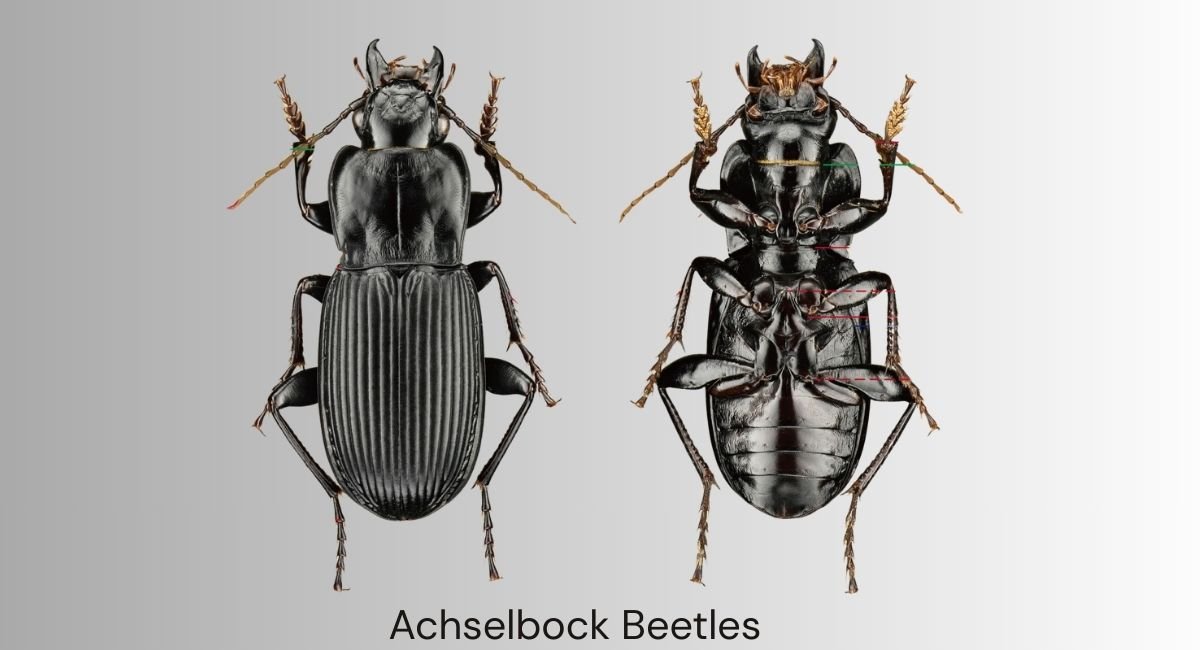
Achselbock beetles belong to the fascinating longhorn beetle family (Cerambycidae), known for their distinctive elongated antennae and unique appearance. These beetles play important ecological roles while sometimes causing concerns for homeowners and gardeners.
What is an Achselbock Beetle?
The term “achselbock” comes from German, referring to specific species within the longhorn beetle family. These beetles are characterized by antennae that can be as long as or even longer than their bodies. The name translates to “shoulder beetle” in English, referencing the prominent shoulder area where their hardened wing cases (elytra) meet.
Achselbock beetles are part of the Cerambycidae family, which includes over 35,000 species worldwide. These insects undergo complete metamorphosis, transforming from eggs to larvae, then pupae, before emerging as adults.
Physical Characteristics and Identification
Size and Appearance
Achselbock beetles typically measure between 15-38 millimeters in length, though size varies by species. Their most recognizable features include:
- Long antennae: Often extending beyond the body length, especially in males
- Elongated body: Slender, cylindrical shape
- Hardened wing covers: Protective elytra covering the actual flying wings
- Distinctive coloring: Ranges from black and blue-gray to yellow and red patterns
Key Identification Features
Males generally have longer antennae than females—sometimes twice their body length. The antennae sockets sit on small tubercles on the face, a unique characteristic that distinguishes them from similar-looking beetles.
Their bodies can display various patterns including spots, stripes, or solid colors. Some species exhibit striking color combinations like metallic blue-green with black markings, while others appear in more subdued browns and blacks.
Life Cycle and Behavior
Egg Stage
Female achselbock beetles lay their eggs in cracks or crevices of tree bark, particularly in weakened or dead trees. A single female can lay between 30-80 eggs during her lifetime.
Larval Stage
The larvae are the longest-lived stage, often spending 3-5 years developing inside wood. These whitish, C-shaped grubs:
- Feed on wood tissue, creating extensive tunnel systems
- Range from 0.5 to 22 centimeters long
- Have well-developed mouthparts for chewing wood
- Remain hidden beneath bark or inside trunks
Pupal and Adult Stages
After several years, larvae pupate for about 6-8 weeks before emerging as adults. Adult beetles live much shorter lives—typically only 3-7 weeks—during which time they focus on reproduction.
Habitat and Distribution
Achselbock beetles inhabit forests, woodlands, and areas with abundant dead or dying trees. They’re found across:
- North America: Various species throughout the United States and Canada
- Europe: Common from Spain to the Caucasus region
- Other regions: Present on all continents except Antarctica
These beetles prefer specific tree species depending on the variety. Some favor:
- Beech trees
- Oak trees
- Pine and spruce
- Various hardwoods
Ecological Role
Benefits to Ecosystems
Despite their reputation as pests, achselbock beetles serve crucial ecological functions:
- Decomposition: Breaking down dead wood returns nutrients to soil
- Habitat creation: Their tunnels provide homes for other insects and small animals
- Pollination: Some species visit flowers and contribute to pollination
- Food source: They serve as prey for birds, mammals, and other predators
Nutrient Cycling
The presence of these beetles significantly impacts forest floor chemistry by affecting microbial activity and nitrogen availability. Their feeding activities accelerate wood decomposition, benefiting plant growth in the surrounding area.
When Achselbock Beetles Become Pests
Signs of Infestation
Watch for these indicators:
- Exit holes in wood (circular, 6-12mm diameter)
- Fine sawdust (frass) near wood surfaces
- Weakened structural wood
- Adult beetles emerging from wood in spring/summer
- Tapping or chewing sounds inside wood
Vulnerable Wood Types
These beetles typically target:
- Dead or dying trees
- Freshly cut lumber
- Seasoned firewood
- Weakened structural timber
- Stressed or damaged trees
Economic Impact
In commercial settings, achselbock damage can be significant. Lumber mills face losses when wood-boring insects degrade timber quality. Homeowners may encounter structural concerns if beetles infest wooden components of buildings.
Prevention and Control Methods
Natural Prevention
Tree Health: Maintain healthy trees through proper watering, pruning, and disease management. Healthy trees are more resistant to beetle colonization.
Wood Management:
- Remove dead trees and stumps promptly
- Store firewood away from structures
- Keep lumber dry and off the ground
- Apply wood sealants to cut ends
Physical Control
- Light traps: Can attract adult beetles, particularly males
- Pheromone traps: Use specific scents to catch beetles during mating season
- Tree shaking: In small-scale situations, shake isolated trees to collect feeding adults
- Soil tilling: Effective for controlling grubs in ground-level wood
When to Call Professionals
Contact pest control experts if:
- You discover active infestations in structural wood
- Multiple exit holes appear in your home
- Wood shows significant damage or weakening
- DIY methods prove ineffective
Common Achselbock Species
European Species
Rosalia alpina (Alpine Longhorn): A protected species with distinctive blue-gray and black markings. Lives in beech forests and can produce chirping sounds.
Rutpela maculata (Spotted Longhorn): Features yellow wing covers with black spots. Common throughout Europe and active on flowers during summer.
North American Species
Strangalia species: Various flower longhorns that visit blooms to feed on pollen. Generally smaller than other longhorn beetles.
Monochamus scutellatus (White-spotted Sawyer): Large, black beetle with white spot at wing base. Common in pine and spruce forests.
Interesting Facts
- Some achselbock beetles can produce defensive chemicals when threatened
- Their larvae can survive for years inside wood without emerging
- The name comes from Greek mythology: Cerambus was a shepherd transformed into a beetle
- Ancient Greek children played with these beetles, tying threads to their legs
- Nikola Tesla experimented with achselbock beetles as a child, creating a beetle-powered “engine”
Conservation Status
Several achselbock species face population declines due to:
- Habitat loss from deforestation
- Removal of dead wood from forests
- Climate change affecting host tree species
- Use of insecticides
Some species, like Rosalia alpina, are now protected by law in multiple European countries including Germany, Hungary, Italy, Poland, and Slovakia.
How to Observe Achselbock Beetles Safely
Best Times for Sightings
- Spring to early summer: Adults emerge and become active
- Late evening: Many species are most active at dusk
- Warm, humid days: Ideal conditions for beetle activity
Where to Look
Search around:
- Flowers and flowering trees (adults feed on pollen)
- Dead or dying trees
- Fresh tree stumps
- Stacked firewood
- Forest edges and clearings
Photography Tips
These beetles typically remain still when approached by large objects, making them excellent photography subjects. Look for them on flowers during daylight hours or near lights at night.
FAQ
Q: Are achselbock beetles dangerous to humans?
A: No, these beetles do not bite or sting. Some species may produce defensive secretions if handled roughly, but they pose no direct threat to people.
Q: How long do achselbock beetles live?
A: The larval stage lasts 3-5 years, but adult beetles live only 3-7 weeks. The total life cycle spans several years.
Q: Can achselbock beetles damage my house?
A: They can infest wooden structures if dead or weakened wood is present, but they don’t typically attack sound, treated wood. They prefer dead trees and untreated lumber.
Q: How do I tell achselbock beetles apart from other insects?
A: Look for extremely long antennae (often longer than the body), elongated body shape, and the characteristic shoulder area where wing covers meet. The antennal sockets on small facial tubercles are unique to this family.
Q: What attracts achselbock beetles to my property?
A: Dead trees, firewood piles, lumber, and stressed or dying trees attract these beetles. They’re drawn to chemical compounds released by damaged wood.
Conclusion
Achselbock beetles are remarkable insects that play essential roles in forest ecosystems. While they can occasionally cause concerns as wood pests, understanding their behavior and implementing proper prevention strategies helps manage any issues effectively.
These beetles remind us that even creatures we might consider pests contribute valuable ecological services. By maintaining tree health, managing dead wood appropriately, and appreciating their place in nature, we can coexist with these fascinating longhorn beetles.
Whether you’re a gardener concerned about tree health, a homeowner protecting wooden structures, or simply an insect enthusiast, knowing more about achselbock beetles enhances your appreciation for the complex relationships within our natural world.